Our Top Stories
Sustainability and perception of cost: Trendwatching’s analysis of Bain’s The Visionary CEO's Guide to Sustainability 2024 highlights consumer insights from 10 countries, including the UK, USA, and France. Across all nations, an average of 27% believe living sustainably would cost them less, ranging from 17% in the UK and Germany to 52% in Indonesia. These findings suggest that strategies to promote sustainable living need to be tailored to each region. In Great Britain, one of the most effective ways to encourage behaviour change is to first dispel the perception that sustainable living is more expensive. Tools like the Reewild app and broader educational initiatives can help demonstrate the cost benefits and advantages of shifting habits and lifestyles. [Trendwatching]
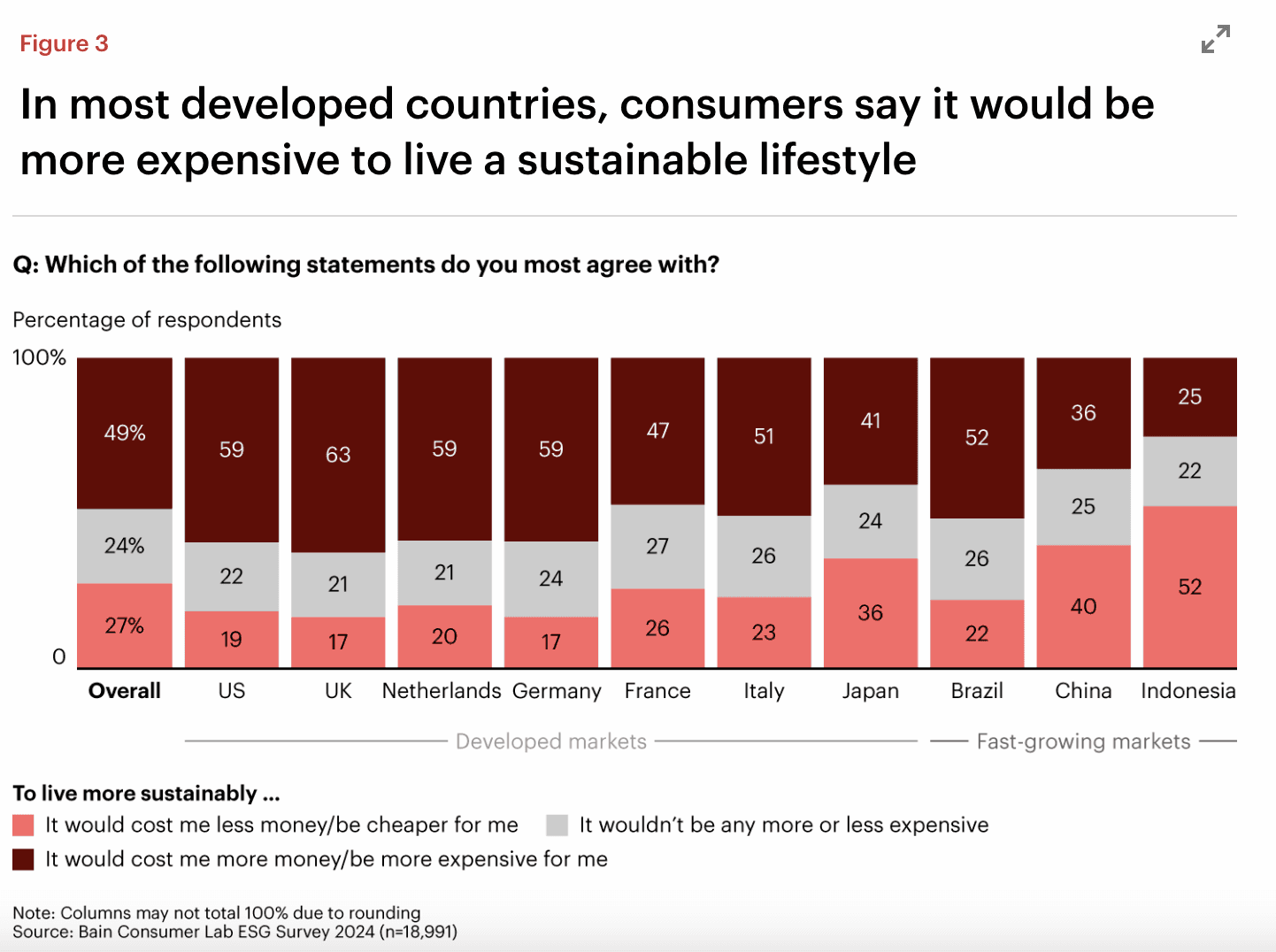
In countries like the UK and US, most consumers believe sustainable living would be more expensive. Image source: Bain & Company
Using AI to personalise: The Financial Times reports that Tesco is planning to expand its application of AI to attract more customers by personalising how they shop. The retail giant believes it can harness artificial intelligence to improve its Clubcard loyalty discount scheme, even suggesting ways that individual shoppers can make healthier choices and reduce waste. By creating more personalised nudges, the supermarket will be able to actively recommend products that suit user’s preferences, but that also improve the added value of certain purchases. [FT]
Business Spotlight - Aldi
Grocery retail giant Aldi South Group is now one of the only companies in its sector to have its long-term climate goals verified under the Science Based Targets Initiative’s (SBTi) Net-Zero Standard. The company has pledged to cut its absolute Scope 1 and Scope 2 emissions by 90% by 2035. While many food businesses face difficulties meeting the SBTi’s Net-Zero requirements—particularly in measuring and reducing indirect emissions tied to agriculture—the value supermarket chain believes it holds a competitive edge. With 90% of its products being Aldi-exclusive, the retailer works closely with suppliers to directly address and reduce emissions across its supply chain. [Edie]
The Big Picture
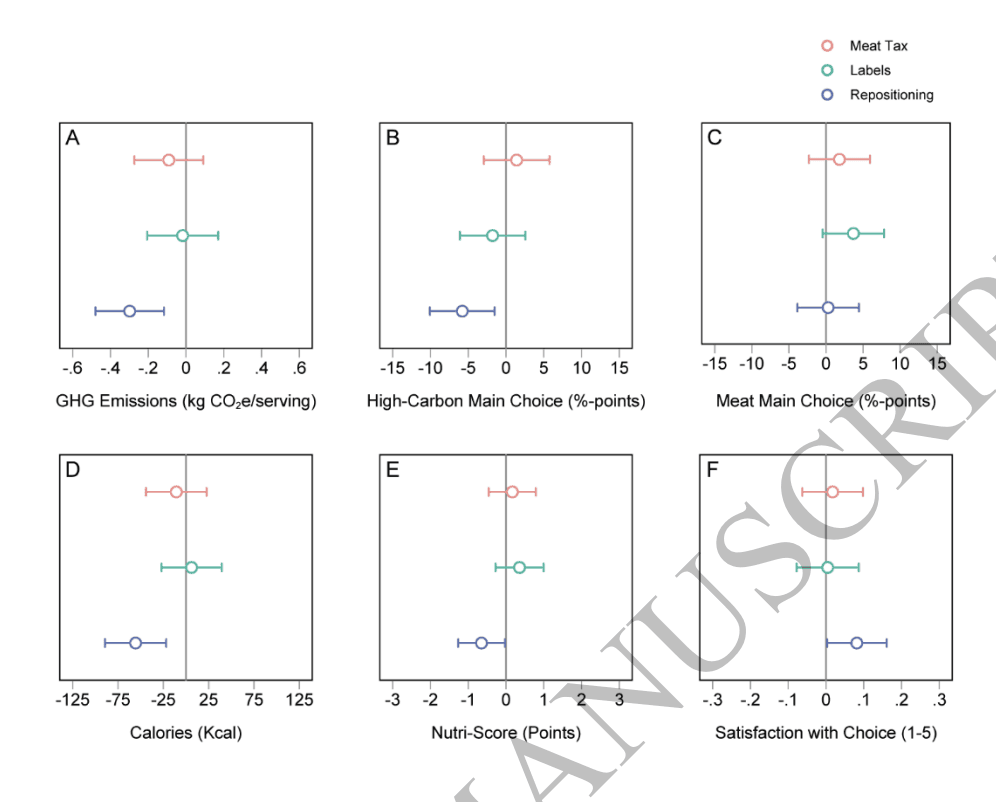
New research has found that putting lower carbon options first on the menu (repositioning) reduced the average carbon footprint of meals by 0.3 kg/CO2e, with no decrease in consumer satisfaction. Changing the menu order was also a more effective strategy than meat taxes (10% price increase) and traffic light carbon labels. Image source: PNAS Nexus
About Vela
At Vela, we make better choices feel effortless.
Since day one, we’ve been building tools that reward you for living well — for your health, your wallet, and the planet.
Whether it’s tracking everyday spending, earning points for healthier shops, or unlocking rewards you actually want, Vela turns intention into action. Because most people care. They just need it to fit into real life.
We don’t believe sustainability should feel like sacrifice.
Our goal is simple: remove the trade-offs. Make climate-positive living practical. Make healthy habits rewarding. Make doing better feel worth it.
We’re here to spark a shift in everyday behaviour — one shop, one choice, one reward at a time.