Our Top Stories
Gamifying climate change education: Climate change can sometimes be conceptually and psychologically challenging to understand and address. According to The Conversation, one way to make it easier is to gamify education. This strategy has been successful across many other learning spaces, including language and fitness. New research in secondary schools found that using games improved climate change understanding, interest in science and willingness to take action. Once at scale, gamification can be an effective tool to shift behaviours and inspire more sustainable consumer choices. [The Conversation]
Looking to leaders: The Guardian reports on new findings that people are significantly more willing to reduce their carbon footprint if they see leaders doing the same. There have been strikingly few examples of politicians and celebrities leading by example, which experts argue could be a crucial missing link to encouraging and enabling behaviour change across the UK. Currently, a standoff exists, with politicians reluctant to ask people to change their behaviour and people unwilling to change without politicians showing the way. Yet, we sit at a crucial time in history that requires leaders to step up and bridge this gap. [The Guardian]
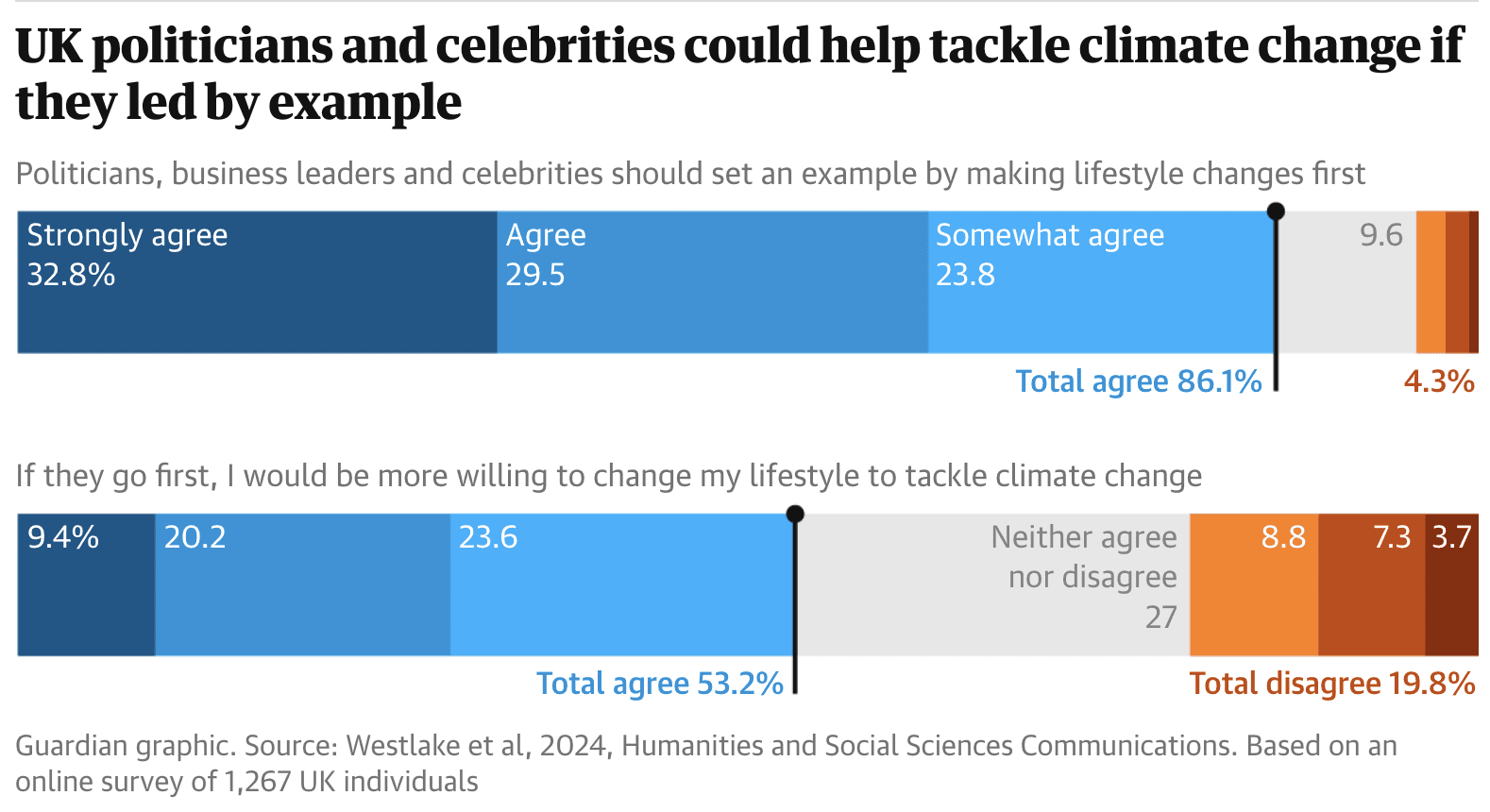
Individuals believe that society’s leaders should be the ones to make lifestyle changes first. Image source: The Guardian
Business Spotlight - Yum Bug
Yum Bug is launching London’s first restaurant to serve edible insects, aiming to transform the public’s perception of bugs as a nutritious and sustainable food source. Insects like crickets produce 80 times less methane than cattle and deliver 50% more protein with a fraction of the emissions. Recognising the importance of education in driving change, the restaurant encourages diners to engage, ask questions, and reflect on the information before making their choices. With a straightforward swap from beef to insects having such a significant effect on an individual’s climate footprint, the company hopes to be a driver for inspiring change in its customers’ everyday lives. [Thred]
The Big Picture
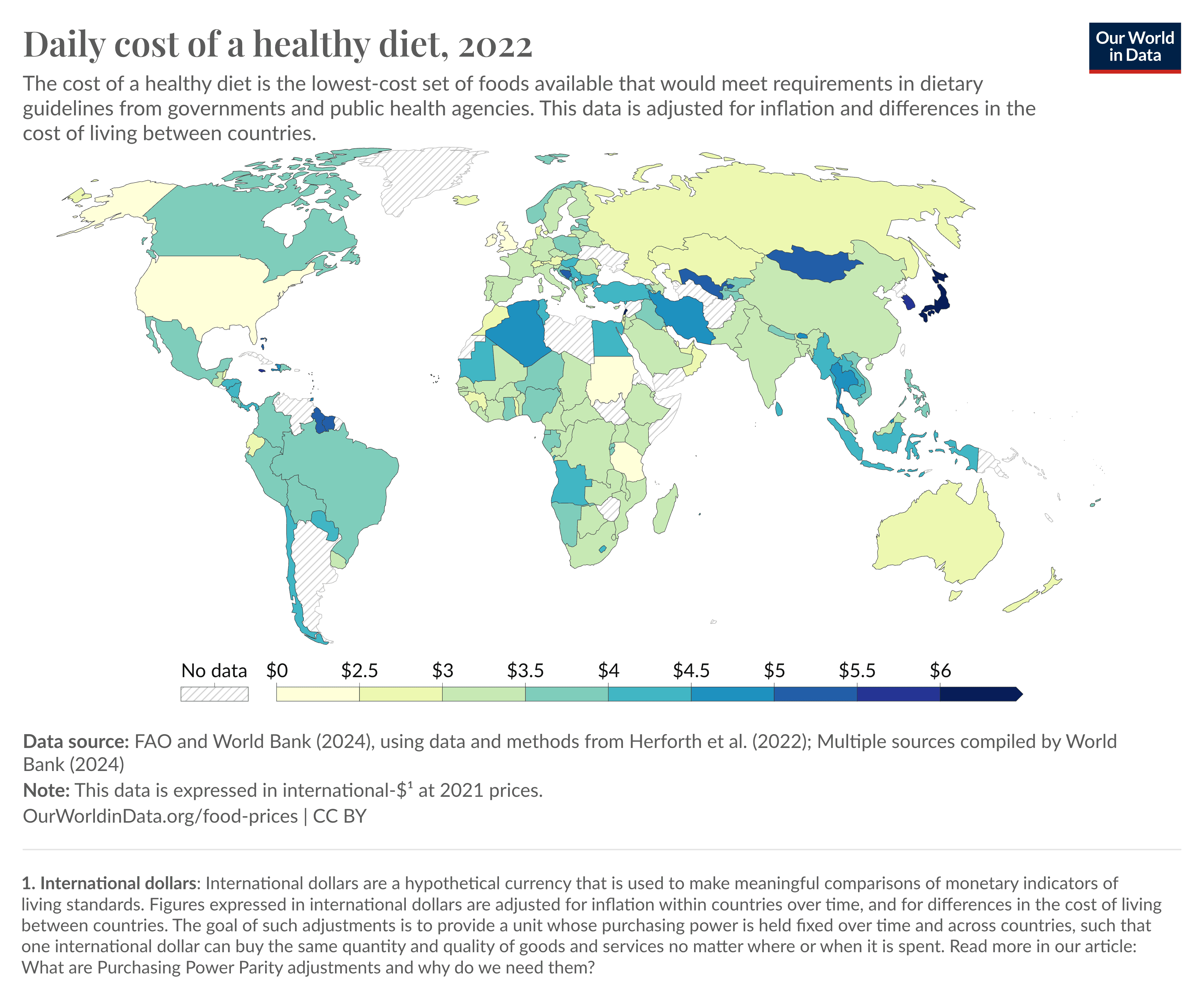
The cost of a healthy diet varies significantly worldwide. However, it is less than $2.5 per day in the UK. With healthy and sustainable diets so intertwined, we must increase awareness and education about how individuals can shift their choices to save money while eating better for themselves and the planet. Image source: Our World In Data
Looking to leaders: The Guardian reports on new findings that people are significantly more willing to reduce their carbon footprint if they see leaders doing the same. There have been strikingly few examples of politicians and celebrities leading by example, which experts argue could be a crucial missing link to encouraging and enabling behaviour change across the UK. Currently, a standoff exists, with politicians reluctant to ask people to change their behaviour and people unwilling to change without politicians showing the way. Yet, we sit at a crucial time in history that requires leaders to step up and bridge this gap. [The Guardian]
About Vela
At Vela, we make better choices feel effortless.
Since day one, we’ve been building tools that reward you for living well — for your health, your wallet, and the planet.
Whether it’s tracking everyday spending, earning points for healthier shops, or unlocking rewards you actually want, Vela turns intention into action. Because most people care. They just need it to fit into real life.
We don’t believe sustainability should feel like sacrifice.
Our goal is simple: remove the trade-offs. Make climate-positive living practical. Make healthy habits rewarding. Make doing better feel worth it.
We’re here to spark a shift in everyday behaviour — one shop, one choice, one reward at a time.